
Real compute. Real accountability.
Own the machines.
Power the future.
Hold fractional shares of income-producing GPU hardware. Rent is denominated in USDC, metered every hour, signed at the source and settled daily — with accounting designed for Solana. This is a demo with simulated funds; nothing here is a live investment.
8× NVIDIA L40S · 48 GB · Kurogane Ward (fictional)
Source: deterministic demo fleet seed · no real hardware
How the grid works
Three moves. No mystery.
- 01
Own
Choose a single sled, a whole rack, or the diversified pool. Fund a USDC subscription balance, then buy non-transferable ownership shares at current NAV.
- 02
Rent
Tenants rent the GPUs. A sealed meter samples every GPU once a minute and signs one record per machine per hour — GPU-seconds, energy and billed rent.
- 03
Settle
At 00:00 UTC each completed day's net rent — after energy, colocation, operator fee and maintenance reserve — is credited pro-rata to owners. Withdraw, or redeem monthly at NAV.
Rent-cost waterfall
Where every dollar goes.
Last 30 complete UTC days across all eight demo sleds, computed from the same hourly meter data shown in the ledger. Idle and maintenance machines still pay colocation; that drag is visible, not hidden.
Read the fee modelHistorical sample figures only. Not a projection, forecast or yield. Real rent depends on tenant demand, pricing and uptime.
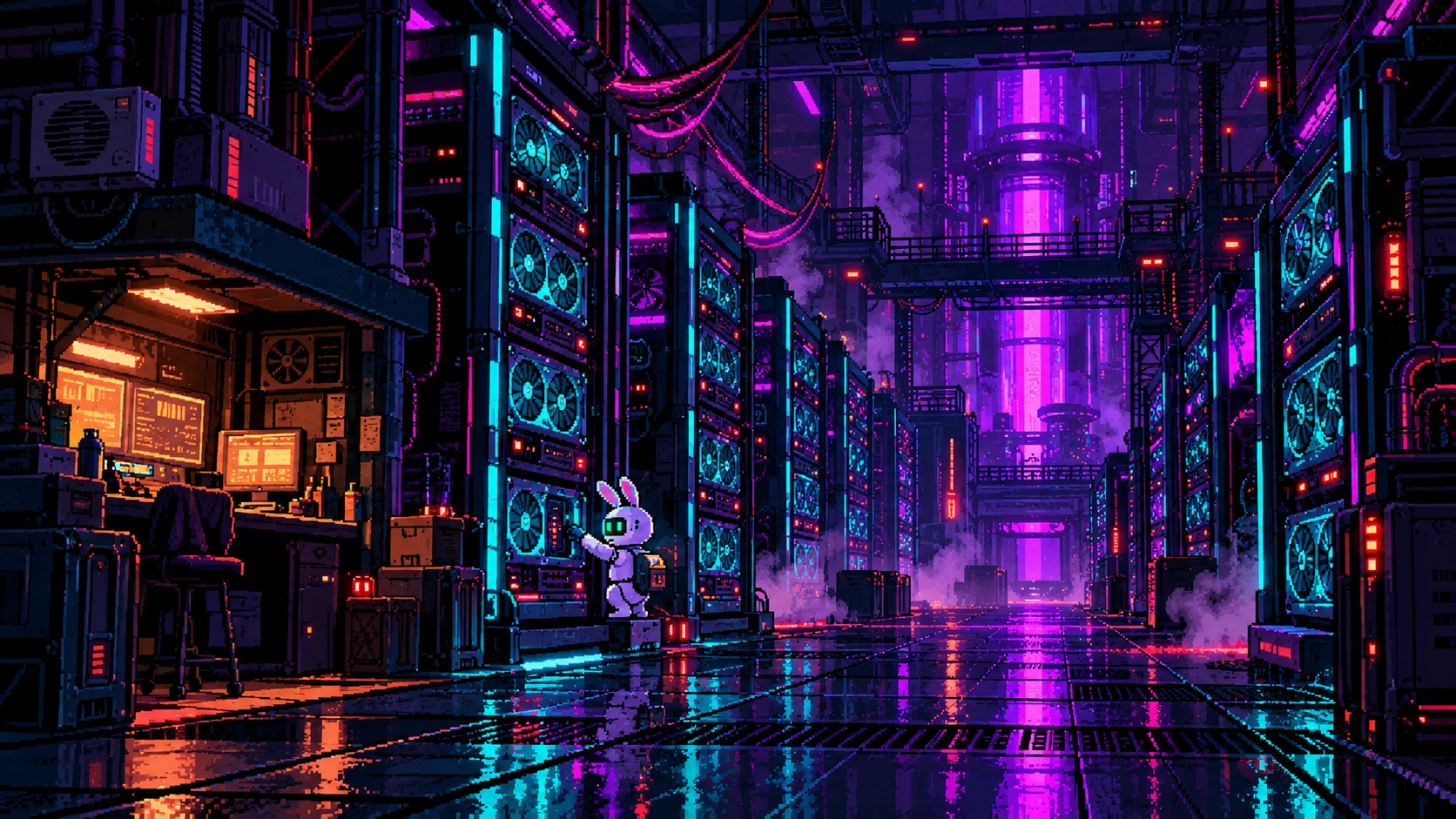
Core District · inventory
Walk the racks.
Kurogane Ward · Sled 01
8× L40S · 384 GB VRAM
Kurogane Ward · Sled 02
8× L40S · 384 GB VRAM
Kurogane Ward · Sled 03
8× L40S · 384 GB VRAM
Kurogane Ward · Sled 04
8× L40S · 384 GB VRAM

Liquidity Canal · Meteora DLMM
Put your rent in range.
An optional workflow: take USDC rent you've already settled and withdrawn and place it in your own PUNK/USDC concentrated-liquidity position on Meteora DLMM — with a separate swap step and a separate add-liquidity step, each confirmed by you.
- Separate cash flows. LP trading fees are not GPU rent. Your GPU shares are never LP collateral.
- Out of range = no fees. If price leaves your bins, your position earns nothing and sits in one token.
- Inventory risk. As price moves, DLMM converts your USDC into PUNK (or back). You can end with less value than holding.
- No backing. PUNK has no peg, floor, redemption right or yield entitlement. A pool is not yet live.

Reactor Hall · Proof of Compute
Don't trust the dashboard. Verify it.
Every hourly record is canonical JSON, hashed with SHA-256, chained to the previous record, signed with Ed25519 by the site's meter key and committed to a daily Merkle root. Your browser checks each step itself — edit one byte and watch it fail.
Metering proves what the meter observed. It does not prove a tenant paid, or who owns the hardware — that's why each record reconciles to collected USDC.
Open the ledger{
"machine_id": "GP-KGW-S01",
"hour_start": "…T09:00:00.000Z",
"samples": 60, // one per minute
"gpu_seconds_billed": 26530, // ≤ 28,800
"energy_wh": 3779,
"billed_micro": "4054305",
"prev_hash": "9f1c…e02a",
"signer": "demo site key"
}
sha256 → 3b7a…c41d
ed25519 → ✓ locally valid (demo key)
merkle → ✓ included in KGW day root
solana → ○ anchoring not configuredQuestions at the counter
Ask the rabbit.
The stalls are open.
Walk the Night Market, buy demo shares, fast-forward the clock to watch rent settle, then verify every record yourself.